Haarlem Gets an "A" for Amaazing!
Updated: Aug 8
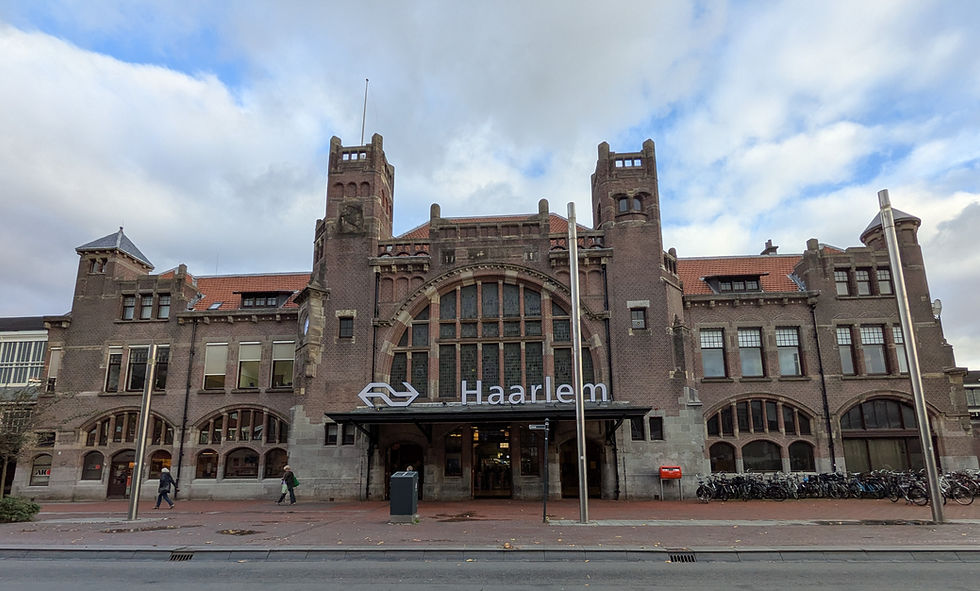
On our recent 8-day trip to the Netherlands, we decided to start out by staying in lovely Haarlem. Haarlem sits just 18 kilometers (11 miles) west from Amsterdam and is a mere 15 minutes by train. I can’t get from point A to point B WITHIN my own city in under 15 minutes on public transportation, so that train travel trek between the two fair, lowland cities was a non-issue. It’s not even worth mentioning. Except to mention that it’s worthwhile to stay in and explore brilliant Haarlem!

In addition to the short intercity travel time to and fro the mighty Amsterdam, the hotel prices in Haarlem are easily half to a full two-thirds less than those in the city where the Amstel be dammed. It was a no-brainer to begin our Netherlands voyage in Haarlem, and since I have nary a brain cell to spare, I am thankful.

We stayed at the perfectly located Hotel Lion d’Or, situated on the literally titled “Stationsplein,” the plaza outside the gorgeous Haarlem train station. Lion d’Or is just fine, with super friendly staff (they even allowed us to check in at 9 AM) and in the aforementioned perfect location. The view from our room was non-existent, as we were housed in interior digs with a window overlooking an inner courtyard-type thingy with an electrical box and other interior windows looking inward. No matter. With few exceptions, we don’t prioritize luxurious hotel rooms or splendid views. We have had a few extra special rooms (hello Marseille!), but we don’t spend a whole lot of time in our rooms anyway, so why sweat it?

Haarlem felt very relaxed. When we visited, it was cool, calm, and chill. And I don’t mean the temperature, although it was perfectly seasonal late October weather, which is our wheelhouse when wheeling about in Europe. Speaking of wheels, this was the Netherlands, so of course there was a bicycle superhighway directly in front of our hotel. There was also a commuter bus station in the plaza, and throughout Haarlem, pedestrians roamed. Compared to Amsterdam, this lovely, small city was peaceful and quiet, even with buses, bikes, and busybodies bustling ‘bout. Visiting in late October also contributed to the low-key atmosphere, but I am sure that even during the peak tourist season Haarlem is much more at ease than other locales.
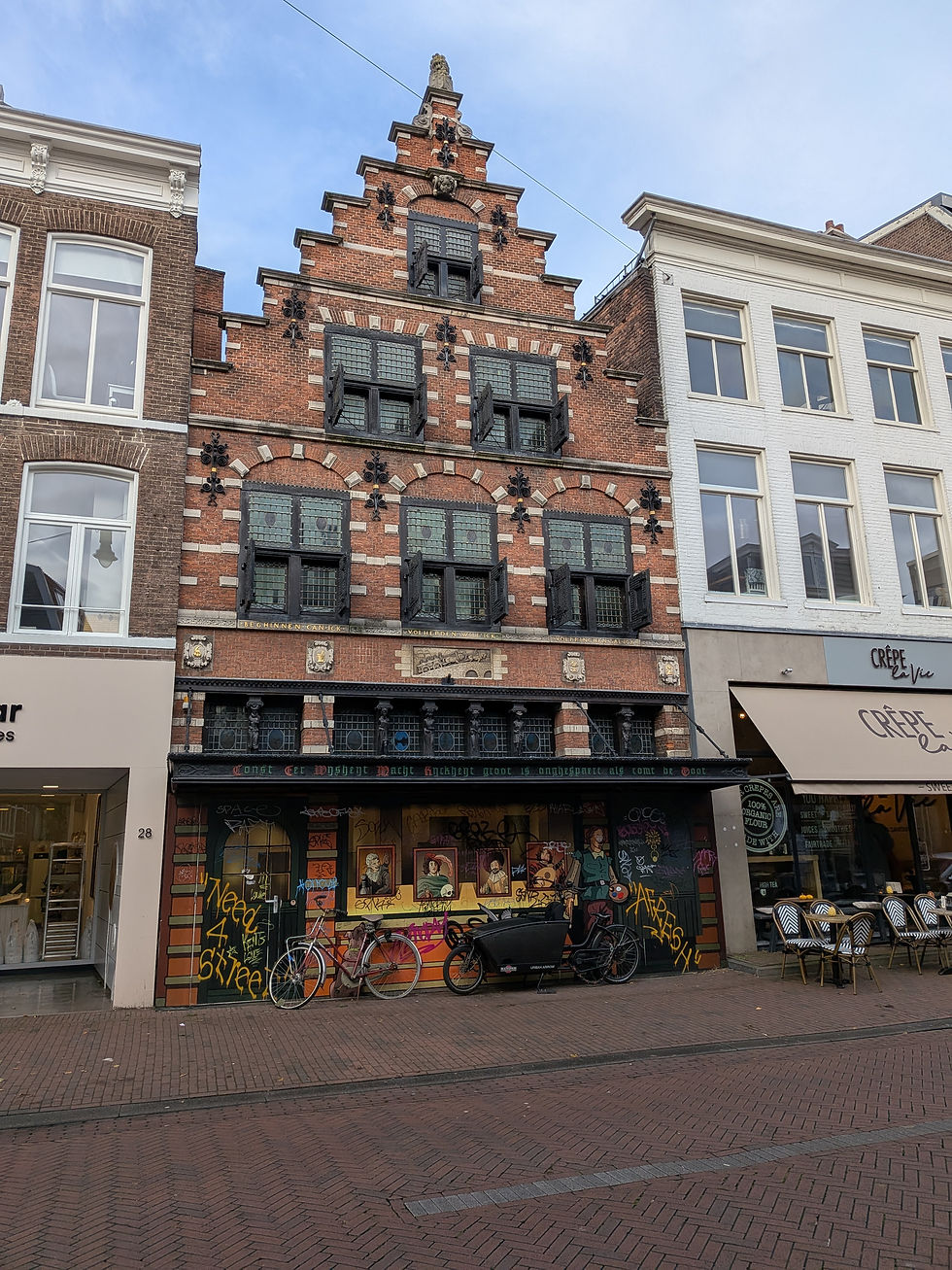
A few canals crisscross throughout the city, though not with the density or flair as in Amsterdam. The Spaarne is the large river that winds through Haarlem Centrum and upon one of its elbows sits the Moulin de Adriaan, a remake of an iconic windmill that became one of the beloved structures in the city until it tragically burned down in 1932 under mysterious (cough, cough…insurance fraud…ahem) circumstances.

Built in 1779, the mill provided, at different times, tobacco, ingredients for cement and paints, and grains. A tour is available and well worth the visit, as the information provided by the guide will really help any historically minded moulin maven make sense of milling.
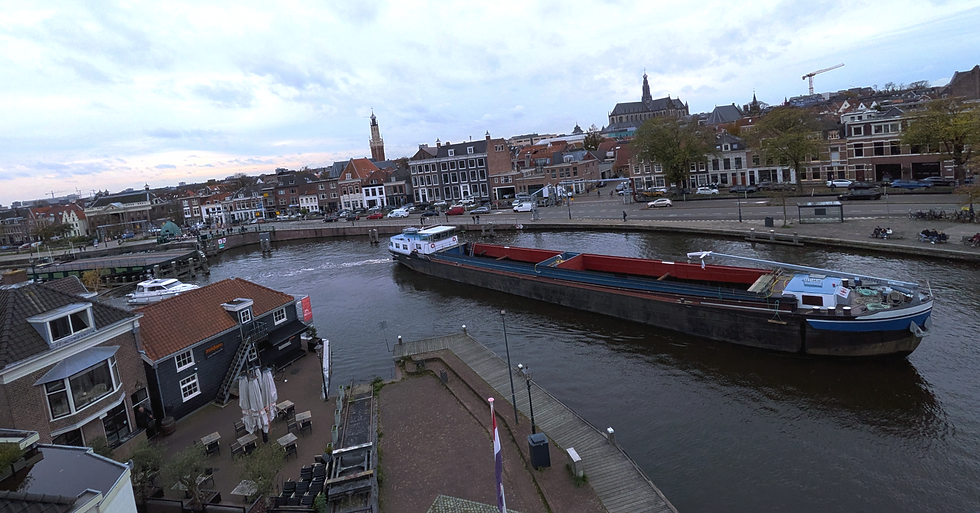
One of the most interesting aspects of windmills we learned is that the position that the miller locks the blades into sends messages to the surrounding populace. In one position, it may signal the birth of a child in the community; in another, that the miller will be on duty the next day; and in still another, that the miller is getting drunk at a nearby tavern. All important news tidbits to be mass-communicated to the locals.

After decades in which the Netherlands experienced war, famine, rebuilding, political instability, and overall economic hard times, Moulin de Adriaan was finally rebuilt and opened to the public in 2002 with meticulous and precise care by local historians, students, artists, and makers. It's quite impressive. This was our up-close-and-personal windmill experience in the Netherlands (we saw a couple others in Amsterdam and Utrecht), and for us that was sufficient. We learned, got to go inside, climbed to the top, and had a gorgeous view of the city and Spaarn.
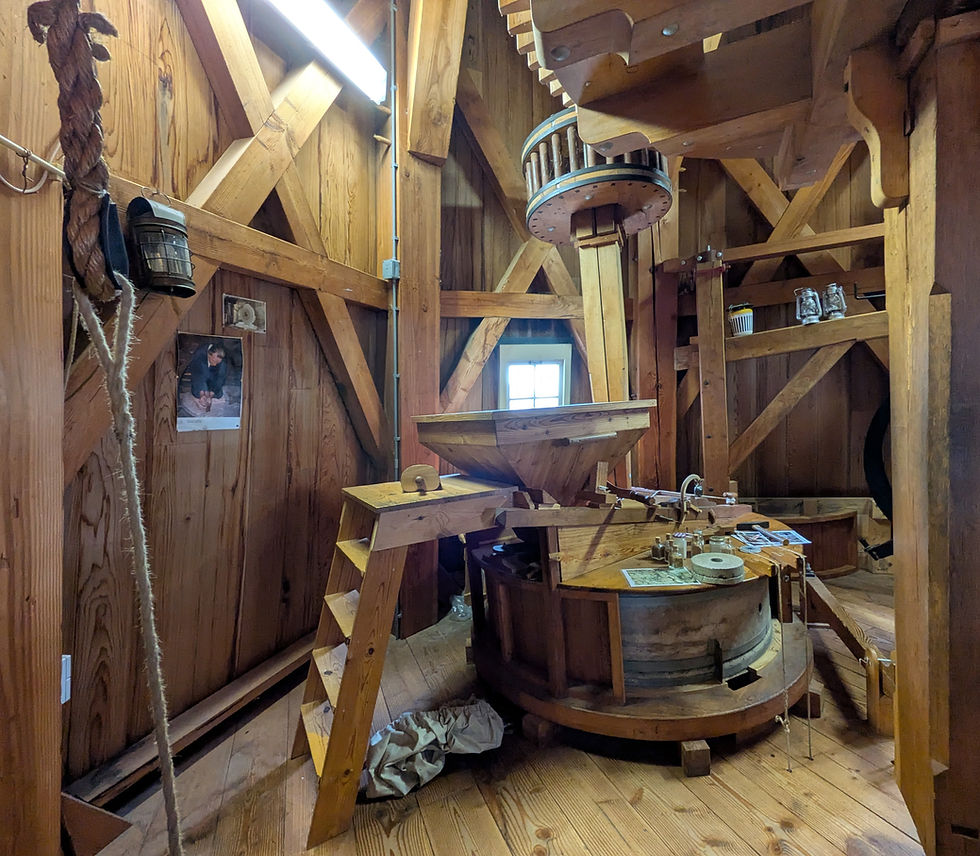
When we visited, the windmill was, of course, under renovation. It was being painted on the outside. It's a theme with our travels, dear moulin-minded meanderer, that between 11% and 34% of the sites we look forward to visiting are under construction, renovation, or otherwise fenced off. I was quite disappointed at first when I heard about Moulin de Adriaan getting a facelift while we'd be visiting, but in truth, the visit was great. Sure, there was scaffolding all around the outside so my professional photographs were far from fantastic. The flat, leaden sky certainly didn't help. Regardless, everything was peachy keen at Moulin de Adriaan.
Other than Moulin de Adriaan, the other must-see site (and honestly difficult to miss) harkening us in Haarlem was the Grote Markt. At the heart of Haarlem Centrum, the Grote Markt is an almost perfect example of a European plaza. And if you're anything like me, if you've seen one, you haven't seen them all, and if you've seen one, you want to see them all. The architecture alone around the Grote Markt is gorgeous enough to warrant a visit to Haarlem. The magnificent St. Bavokerk and Old City Hall are just two of the outstanding buildings.

One of the more exhilarating aspects of travel for me is when I am able to find an exact spot where, in times long past, an artist set up an easel and painted a land or cityscape. One of my absolute favorite experiences in Marseille was when we discovered the exact vantage point from which Provence post-impressionist Joseph Hurard presented a gorgeous image of Marseille's Vieux Port and Notre Dame de la Gard (see Provence and Occitanie: Day 1). Grote Markt and St. Bavokerk were another opportunity to catch the vantage of a vignette.
Gerrit Berckheyde was a Dutch painter in the 17th century, best known for precise cityscapes with lines, depth, and angles that rival those of any Vermeer. He painted the Grote Markt a few times, the most famous of which is viewed from the northwest corner of the pleasurable pedestrian plaza. We had the privilege of seeing one of these paintings in Haarlem at the Frans Hals Museum. Standing in that exact spot and getting a live image of what the painter saw was quite striking, as the major buildings are still extant and almost exactly as seen in the Berckheyde works. Such fun! I recommend to anyone going anywhere to find an old-timey painting of the area and try to locate the exact spot from which the artist interpreted. Joy!
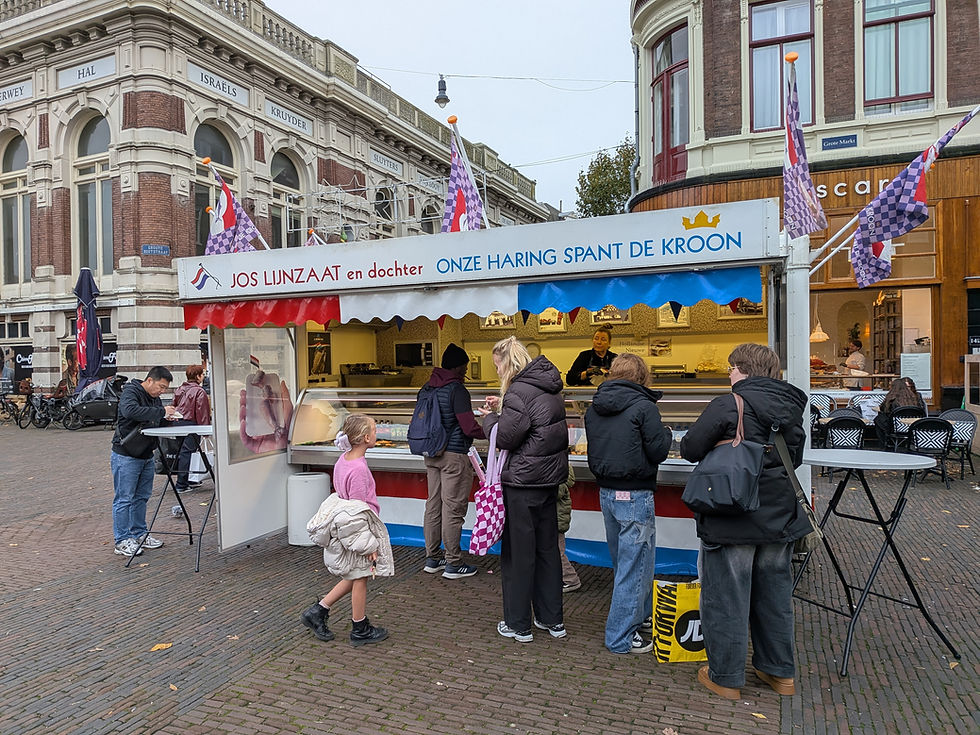
Also in the Grote Markt is a splendidly scrumptious, skilled street stall vending smoked herring. While in the Netherlands, if you don't sample a Hollandse Nieuwe (the fish) from a haringhandel (the stall), then why even bother going to the Netherlands in the first place? I sampled this delicacy from this food stall in Grote Markt not once, not twice, but thrice. It was that good.
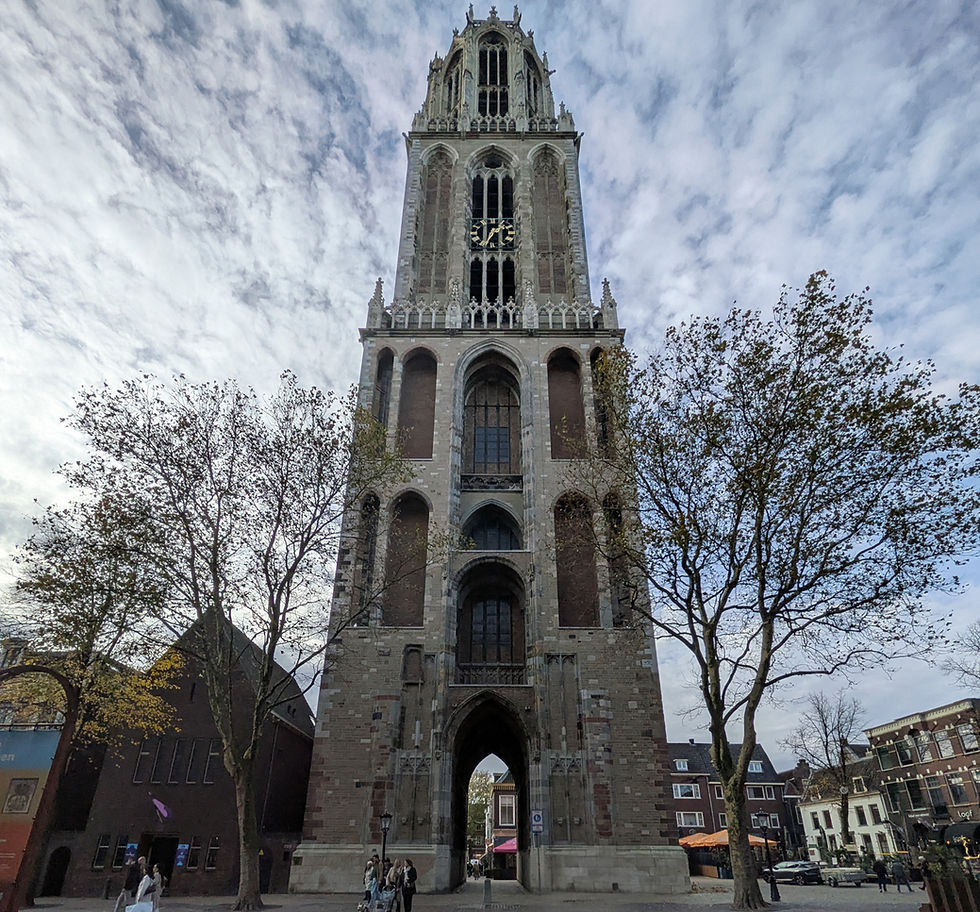
St. Bavo’s has a modest entry fee (4 euros as of this writing) which is interesting as I do not recall being rifled for cash when visiting an historic church in Europe before. Not that I have seen them all, but I have encountered dozens. I could be wrong. My memory is often muddled and misguided. What is not misguided is my recommendation to you, dearest church cherisher, to visit and wander the cavernous interior of St. Bavo’s in Haarlem.

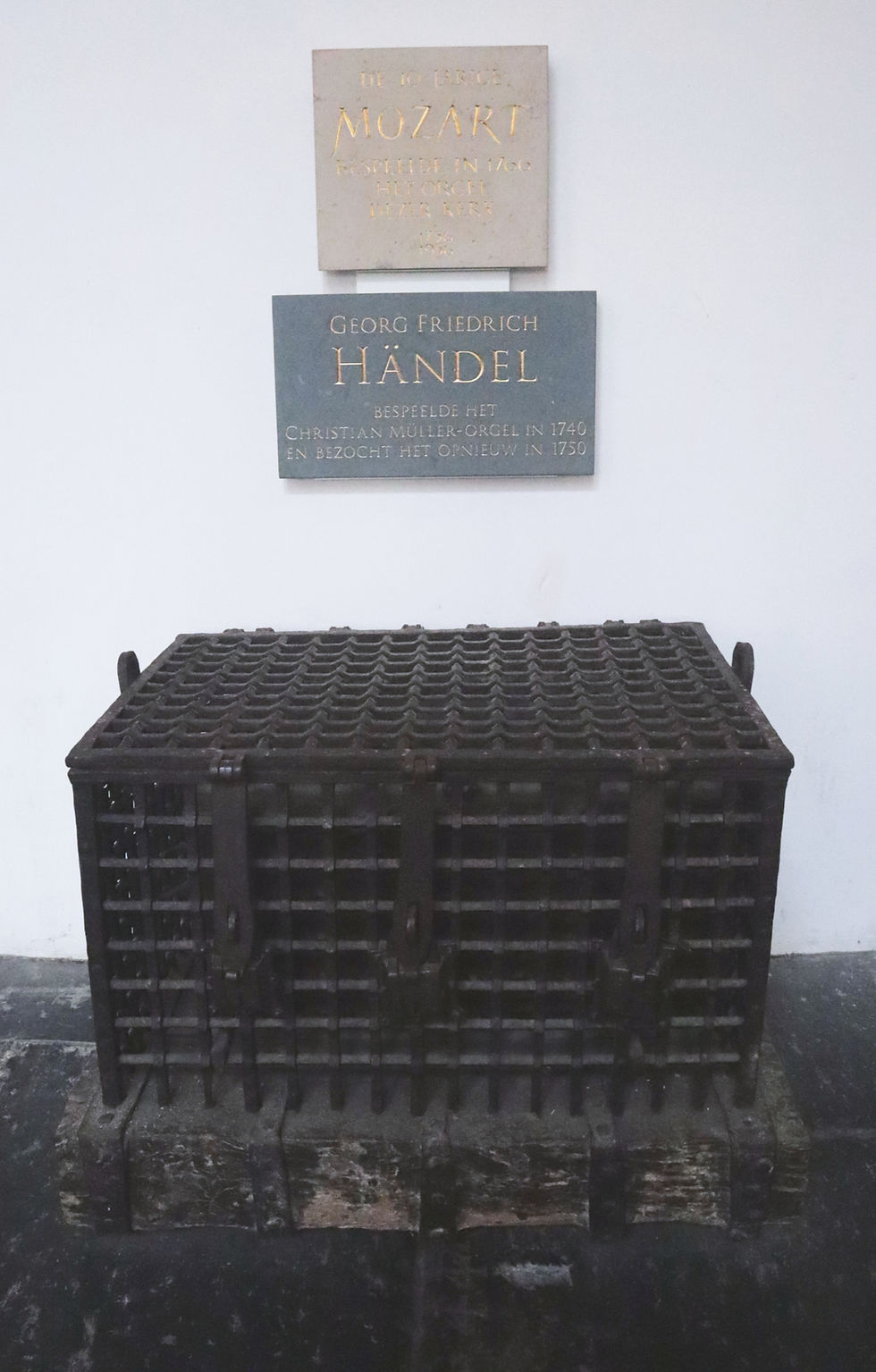
Not only will you get to behold the magnificent organ that both Handel and Mozart played, but you will also see what may or may not be the oldest safe/lock chest in Haarlem.
St. Bavo's also contains some truly magnificent carvings on the altar, one of which depicts a “pillar biter,” a caricature of a Catholic so full of religious zeal that they can't contain themselves, and therefore they eat the church. Throwin’ some late medieval shade, these Haarlemmers. There are also graves all throughout the church, inlaid into the floor. So while you stroll through the cold chapel confines, you are walking on people’s graves. Enjoy!

Grote Kerk (as St. Bavo is also known) is not the most comforting and cozy of churches. As with most churches in the Netherlands, this grand former Catholic monument was seized by Protestants and remains in Luther lineage. There are a few smashed-up and damaged statues to attest to the contentious nature of the reformation and religious wars, fraught with violence and vandalism. Grote Kerk was built way back in 1307 and became Protestant in 1578, and thus the interior is rather austere and undecorated compared to Catholic churches and cathedrals in Europe. It’s a marvelous monument to behold despite not being a Catholic showpiece with art abounding. You can easily spend well over an hour or even two wandering about.

Only a couple hundred meters from Grote Kerk, through the lovely streets of old Haarlem Centrum, you may want to stop by the Corrie Ten Boom House. This is a museum in the former home of Corrie Ten Boom. Along with Corrie's family, the house sheltered scores of Jews in Haarlem during the Nazi occupation in the 1940s. The family was ultimately betrayed, and while 30 (yes, THIRTY) people were arrested in their home, all the Jews in hiding remained secreted and were able to escape. Corrie and her sister and father were sent to camps, where her father, Casper, died. Similar to the more famous Anne Frank House in Amsterdam, one can tour the inside and see the brilliantly crafted hiding spot. The house is quite unassuming on the corner of an alley and street in a busy shopping lane, so you may miss it if you are looking elsewhere, so pay attention!

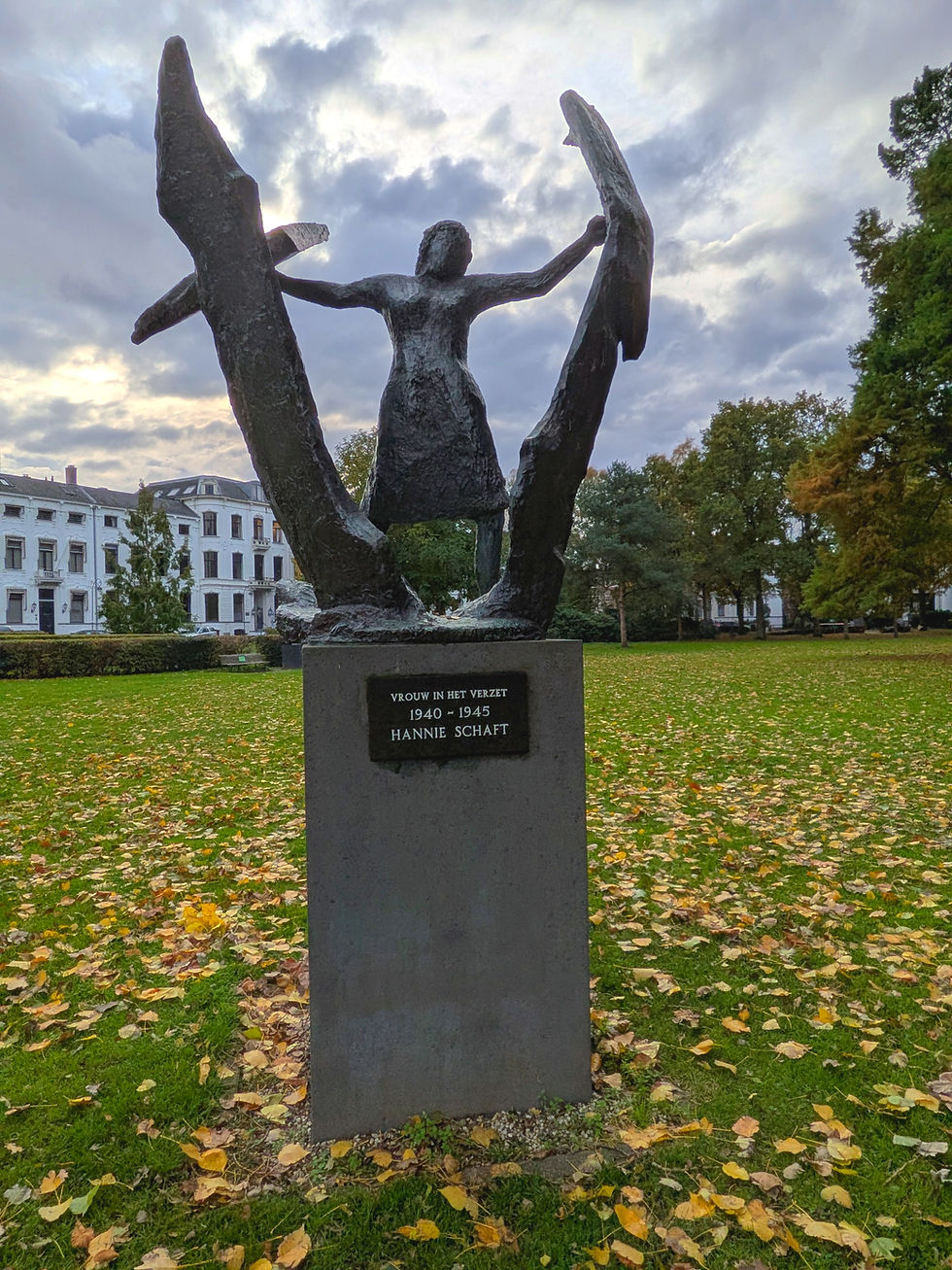
Keeping with the theme of resistance to Nazi occupation, one of the monuments I was most anticipating laying my road-weary eyes upon was the Hannie Schaft memorial in Kenaupark. It's just north of the old town center, only a short stroll away from the train station. Hannie Schaft was a young woman when the German fascists invaded and occupied the Netherlands. Hannie immediately knew which side she was on and acted accordingly. She subsequently engaged in every aspect of resistance while struggling with bravery and determination.
For an excellent discussion of Hannie’s life as a resistance freedom fighter (and that of her comrades), check out the marvelous book Three Ordinary Girls: The Remarkable Story of Three Dutch Teenagers Who Became Spies, Saboteurs, Nazi Assassins–And WWII Heroes by Tim Brady. I won't go into deep detail, but suffice to say Hannie did it all. She was, and is, a hero. She was eventually captured, and although in disguise, she was found out. Hannie had blazing red hair, and due to her prolific activity, the Nazis were aware of the woman in the resistance with the bright auburn locks. Hannie colored her hair dark to evade detection, but soon after capture, her dark hair dye started fading, and her bright red roots began showing. The Nazis knew that the woman in custody was no mere Dutch civilian, but none other than the red-haired assassin. She was executed. Her remains were later found in the dunes by the North Sea, the only woman among hundreds of executed and hastily buried resistance fighters. Hannie’s story is inspiring. It's tragic. It's important. Thus, the very first monument I sought out in Haarlem, and indeed the Netherlands in general, was the statue to Hannie.
Haarlem boasts numerous other places to visit, sights to see, and good food to eat. There's the Teylers Museum, which seems like a spectacular museum combining art, science, and natural history. We didn't visit Teylers. Not because we weren't interested but rather due to time constraints. It missed the itinerary cut line by literally one site. The fine arts museum we visited in Haarlem is the Frans Hals Museum, eponymously named for the great Haarlem artist who specialized in portraiture, notably laughing and smiling people. I'll go in depth on this fine fine arts establishment in another post. I will also explore some culinary offerings in Haarlem and throughout our vittles voyage of the Netherlands, of which there are plenty, in a later post. Brasserie Bruis, in Haarlem Centrum a short walk from Grote Markt, is top-notch! It is the sister restaurant of the Michelin Star Haarlem establishment Ratatouille Food and Wine. Brasserie Bruis offers a wonderful coursed menu and excellent wine list without the Michelin Star price. Highly and wildly recommended. There are so many other restaurants in Haarlem that I could not do this lovely lowland municipality justice in terms of gastronomic reviews, but I know what I like, and I liked everything I ate in Haarlem.
We also visited the last town gate from the old medieval wall in Haarlem: Amsterdamse Poort. This gate used to open to a road that led to, well, Amsterdam. As far as I know, you can't actually get inside, and it's rather small at any rate. It's worth seeing just to check out the historic structure in the middle of a bustling modern city. It's a very short walk from Moulin de Adriaan, so you have no excuse if you avoid gazing upon this glorious gateway.

We thoroughly enjoyed everything about Haarlem. It was a perfect way to start our travels through the Netherlands. When we first touched down at Schiphol Airport, we took a train to Amsterdam Centraal, then stepped outside to take a quick walk and purchase two umbrellas (I got a sweet little blue number with tulips on it). We then immediately returned to the train station for the quick ride to Haarlem. From those first few early morning minutes, I could tell that Amsterdam was frantic. Moving. Always moving. That is how I picture Amsterdam in my mind’s eye still to this day: a moving mass of people, vehicles, bicycles, boats, water, trolleys, and trains. It’s always moving. Movement–Amsterdam. Haarlem, on the other hand, was, as I said when I opened this typed travel testimonial, cool, calm, and chill. After a long flight, navigating customs, and train travel, a well-deserved “aahhhhh” and breath of Haarlem air were just what the Dutch doctor dictated. Amaazing!

Comments